


Tag: dental implant posts
Should I Get a Dental Implant or Try to Save My Tooth with Repeat Root Canal?
Is it worth it to save an upper molar tooth with a repeat root canal, or should I get it removed? – Thanks. Colston from NJ
Colston,
Losing upper molars without replacing them can create long-term problems, even later in life. If upper molars are extracted and left unreplaced, the lower molars can gradually drift upward into the empty space. This can change the way the teeth fit together and affect the bite. Even if that doesn’t happen, chewing may become limited to one side of the mouth, placing extra stress on those teeth and muscles.
For that reason, any discussion about extracting these teeth should also include a plan for replacing them.
How Do Dental Implants Compare with Root Canal Treatment?
If a tooth is savable, then comparing implants with root canal treatment becomes worthwhile. Whenever a healthy tooth can reasonably be preserved, many dentists believe saving the natural tooth is the better choice.
Both treatments have excellent long-term success rates. Modern root canal treatment, particularly when performed by an endodontist using current technology, is very reliable. Dental implants are also highly successful and may have a slightly lower risk of failure. However, if an implant does fail, correcting the problem is usually much more involved, often requiring additional surgery and bone grafting.
Cost is another important consideration. In many cases, a root canal and crown cost about two-thirds as much as an implant and crown.
What Are the Pros and Cons of a Dental Implant vs. a Root Canal?
Choosing between these treatments involves more than looking at success rates alone. Recovery time, cost, and future treatment needs all deserve consideration.
Dental Implant and Crown
- Typically costs about 50% more than a root canal and crown
- Requires at least three months for the implant to fuse with the jawbone before the final crown is placed
- May be slightly more reliable over the long term
- Can be much more complicated and expensive to repair if it fails
Root Canal and Crown
- Generally costs less
- Can often be completed in two or three weeks over several appointments
- Has a small risk of future failure, which could require replacing the tooth with an implant later
- Preserves the natural tooth without placing an artificial fixture into the jawbone
Are Your Teeth Likely to Need Root Canals?
You haven’t mentioned unusual sensitivity or other symptoms that would suggest the your tooth is close to needing root canal treatment. While there is always a small possibility that a tooth receiving a crown could eventually require a root canal, the risk appears low.
Removing healthy teeth simply because they might need root canal treatment in the future is difficult to justify. A more conservative approach would be to place the crowns and monitor the teeth. Even if one or both eventually require root canal treatment—which would be an uncommon outcome—preserving the natural teeth would still offer important advantages over extracting and replacing them with implants.
Dr. Thaddeus Michalski, a Rocky Hill, Connecticut dentist, sponsors this post. Read why many of his patients say he is the best dentist in town.
Is This a Tooth Cavity or Internal Resorption?
I’ve seen two dentists in the last three weeks, and both say my tooth has a large cavity inside it. They told me the damage was extensive and said they were surprised I wasn’t experiencing severe pain. After the first dentist showed me the X-ray, I got a second opinion because I had no symptoms, but the diagnosis was the same.
Today I felt throbbing in the gum below that tooth, and I’m concerned it may be getting worse. Both dentists said the tooth could eventually fracture, causing significant pain, so maybe it fractured.
Would it be better to try to save the tooth with a root canal, or should I have it removed and replaced with an implant? The tooth above it already needs an implant because a previous root canal and crown didn’t help, and the post repeatedly fell out. – Thanks. Whitley from Tacoma, WA
Whitley,
A hole that develops inside a tooth is often the result of a condition called internal resorption.
Since two dentists have provided the same diagnosis, you can be reasonably confident about the cause of your symptoms. Internal resorption is a rare condition in which inflammation inside the tooth causes the tooth structure to break down from within. Because the process starts inside the pulp chamber, it can sometimes look very different from a typical cavity.
Can a Dentist Save a Tooth Affected by Internal Resorption?
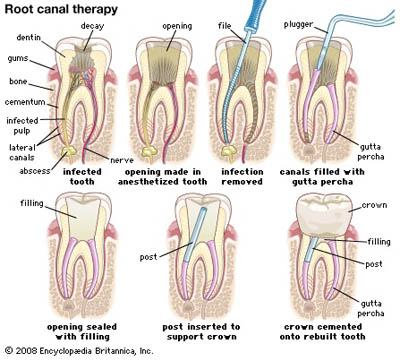
Many teeth affected by internal resorption can be saved. When a dentist diagnoses it before extensive damage occurs, root canal treatment is often the most conservative approach. Removing the inflamed tissue stops the resorption process and allows the tooth to be restored. Saving natural teeth whenever possible often provides the best long-term function and comfort.
What Factors Affect Treatment Decisions?
The right treatment depends largely on how far the resorption has progressed.
Every case is different, but these are some of the factors to consider:
- The extent of the internal damage
- Whether the root has been perforated
- The amount of remaining healthy tooth structure
- The likelihood of long-term success after treatment
If you’ve had a failed root canal in the past, it is understandable to feel hesitant about repeating that treatment.
When Is it Best to Replace the Tooth?
A dental implant may be the better choice if the resorption has severely weakened the tooth. Also, if the damage extends through the root, treatment becomes more challenging. Even if the perforation can be repaired, the remaining tooth structure may not be strong enough to withstand normal chewing forces over time. In those situations, extraction and replacement with an implant can provide a more predictable long-term outcome.
Dr. Thaddeus Michalski, a Rocky Hill, Connecticut dentist, sponsors this post. Read why many of his patients say he is the best dentist in town.
Why Is My Dental Implant Crown Color Still Off?
Although my dentist replaced the first mismatched implant crown he gave me, the second crown is no better. Twice, I went to the lab my dentist uses for color assessment. However, my dentist attached the crown without assessing the color. He did not even ask my opinion. I thought he was putting the crown on for me to check—not cementing it. It felt as if my jawbone would break because my dentist had trouble attaching the crown to the implant. Well, now the crown is the wrong color, and it hurts. I took my time to choose this dentist, but it doesn’t seem like he is good with crowns. Should I ask for a refund and find a better dentist? Am I wrong to think this is ridiculous? Thank you. Jane from Oregon
Jane,
Your frustration is understandable. Unfortunately, your case shows the difference between dentists who understand aesthetics—creating beautiful dental work—and those who want to fix and get it done.
From your description, it seems your dentist lacks aesthetics training or is not interested in your satisfaction with the work.
What Can You Do If Your Dental Implant Crowns Do Not Match?

If your dentist cannot correct your implant crown color, find a dentist trained in aesthetics and artistic inclination. A skilled cosmetic dentist is your best option for getting predictable results.
A cosmetic dentist would ensure the crown color is correct before cementing it. If the color is off, they will return your crown to the lab to correct it.
When a dentist sends you to the lab for a color check, it is a clue that the dentist is not skilled in matching restorations (e.g., a crown) to your tooth color. Your dentist should be more qualified than the technician and instruct the technician, including notes on color-matching the implant crown to your natural teeth. A cosmetic dentist also sends a shade guide and pictures of your smile to help the lab tech craft an accurate match.
How to Find a Reliable Cosmetic Dentist
We recommend looking for a cosmetic dentist with advanced cosmetic dentistry training. How can you find a trustworthy cosmetic dentist?
- Look for a dentist with extensive post-graduate training in cosmetic dentistry.
- Look at a few cosmetic dentists’ websites to see the quality of their work.
- Then, schedule consultations with two of them, discuss your concerns and decide who you can trust to finish the work.
Rocky Hill, Connecticut, dentist Dr. Thaddeus Michalski sponsors this post. Read how he provides some of the best dental care in Rocky Hill.
My Implant Crown Doesn’t Match My Teeth
My dentist did my implant crown the wrong color three times. The shade doesn’t match my surrounding teeth. My dentist said the crown was a close match and suggested that I am fortunate that my dental implant is stable after requesting that she redo the crowns. I am dissatisfied with her work and want to switch dentists. Am I at risk of dental implant failure by having the existing crown removed? – Thanks. Nelson from CT
Nelson,
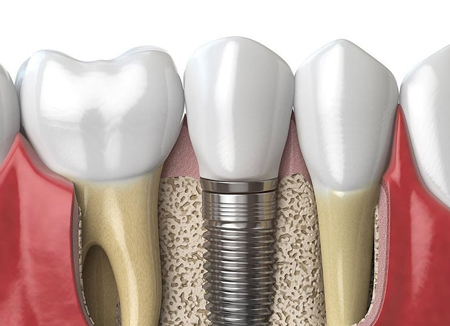
Removing a dental crown by grinding it will not damage the underlying dental implant. However, achieving a perfect color match for a front tooth crown requires meticulous attention to detail and skilled craftsmanship.
Standard shade guides, such as the Vita shade guide, often fail to provide an exact match for front teeth. Shades like A1 and A2, while suitable for back teeth, are inappropriate for the aesthetic demands of a front tooth. Dentists must customize the standard shade to achieve a more precise match by incorporating additional tints and shades.
A common cosmetic dentistry approach involves the following:
- Draw a detailed color map – The dentist will outline areas where additional tints (e.g., pink, yellow, blue) are needed. This map serves as a blueprint for the dental ceramist, who will meticulously apply these tints to the crown to blend seamlessly with the surrounding natural teeth.
- Conduct a try-in – After the initial crown fabrication, the dentist conducts a try-in to assess the color match. Any discrepancies are noted and communicated to the ceramist, who may further adjust the crown.
- Take a picture of the try-in – Digital allows precise visual comparisons and more accurate color corrections.
Only once a perfect color match is achieved is the implant crown permanently cemented.
Dr. Thaddeus Michalski, a Rocky Hill, Connecticut dentist and Diplomate of the International Congress of Oral Implantologists, sponsors this post. Read why his patients think he is the best dentist in Rocky Hill.
Will I Regret Not Getting a Tooth Extraction and Dental Implant?
I had a root canal in 2020 without any problems until now. The tooth has hurt on and off for the past month, but now it’s starting to throb. I am afraid that I will need an extraction. Is it worth repeating a root canal, or would I regret not getting an extraction and a dental implant? – Thanks. Elias
Elias
Root canal failure can be frustrating and painful. It happens when a tooth doesn’t heal completely after a root canal treatment, leading to recurring symptoms. Your symptoms may be the result of root canal failure.
What Causes Root Canal Failure?
A hidden tooth infection or curvy tooth roots can contribute to root canal failure:
- Hidden infection: It can be challenging for a dentist to remove all the infection from a tooth’s complex root canals. Even a tiny amount of remaining bacteria can cause problems later.
- Curved or branching roots: These can make it hard to reach and clean all areas of the tooth.
What Are the Treatment Options for Root Canal Failure?
The treatment options for root canal failure are retreatment, root canal surgery, or extraction and a dental implant for an unsavable tooth.
- Retreatment: A dentist can attempt to clean the infected area and seal it again.
- Root canal surgery: A dentist or specialist must access the tip of a tooth near the gumline and through the bone to remove the infection. An endodontist (root canal specialist) typically performs this procedure (apicoectomy).
- Extraction for tooth fracture or an unsavable tooth: A crack in the tooth can also lead to pain and infection. Unfortunately, saving a tooth with a severe fracture can be challenging.
See a dentist with extensive root canal treatment experience or an endodontist to discuss your options.
Dr. Thaddeus Michalski, a Rocky Hill, Connecticut dentist sponsors this post.
My New Partial Denture Burns My Tongue
My tongue has been burning since I got a new partial denture last November. It burns beneath my tongue and on my lips. I also have bad taste. My dentist suspects a metal allergy and recommends a $4,500 bridge instead. He also gave me liquid lidocaine to numb my mouth. I know that’s not a solution, but I wanted to describe what’s happening completely. Is a dental bridge my only alternative? – Thank you. Sona from IL
Sona
You’re right. Liquid lidocaine is not a solution to the burning sensation on your tongue and lips. We are concerned with your dentist’s diagnosis and treatment options.
A skilled dentist knows the alternatives to a metal-based partial dentist. One option is the Valplast partial.
What Is a Valplast Partial Denture?
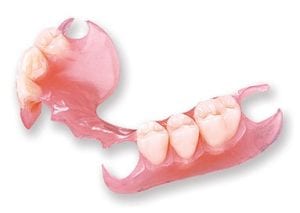
A Valplast partial denture is a denture with a thermoplastic resin framework. Thermoplastic resin is stronger and more flexible than acrylic. It may be a tooth replacement solution if you are allergic to metal-based dental restorations. Although we are unaware of allergic reactions to Valplast, it is not impossible to be allergic to it.
Ask your dentist whether you can benefit from a Valplast partial denture or another thermoplastic resin denture.
What If You’re Allergic to Your Partial Denture?
If you suspect a reaction to your partial denture, we recommend testing from an allergist. Ask your dentist about the metal content of your existing denture and the contents of alternative partial dentures, including acrylic. Nickel in dental materials is the most common allergen. Test results from the allergist can help you find a biocompatible solution.
If your dentist cannot recommend a non-metal partial denture, schedule a second opinion with an advanced cosmetic dentist to discuss your options. A dental bridge should not be necessary. Also, a bridge requires work on teeth adjacent to the missing one. Although it costs more, a dental implant is a healthier, long-lasting solution for a missing tooth. Nevertheless, a cosmetic dentist can explain your tooth replacement options after allergy testing.
Dr. Thaddeus Michalski, a Rocky Hill, Connecticut dentist and Diplomate of the International Congress of Oral Implantologists, sponsors this post.
Lidocaine Doesn’t Work and My Dental Implant Failed
My upper right first premolar cracked last month. My dentist said he couldn’t save the tooth, so he scheduled an appointment for an extraction and implant. Before and during the extraction, my dentist gave me six lidocaine shote. My palate and tongue burned. My dentist placed an implant right after removing the tooth. When I returned for a checkup the following week, I told the dentist about my burning palate and tongue, so he prescribed a mouth rinse. I had a four-month monthly checkup before my dentist said the bone was ready for my final crown. My mouth burned for all that time despite the mouth rinse. My dentist exposed the implant, and we waited a few more weeks for him to take impressions for my final crown. I thought I would be good to go when the crown arrived, and maybe all the burning could calm down.
I can’t explain the extent of my discomfort when the dentist tried to screw the crown onto the implants. This appointment was another round of six lidocaine shots. Finally, he got the crown on, but my bite felt off. Because of my stress, we scheduled two more appointments to correct my bite. It felt okay but not great before I went on vacation in late July. While on vacation, the crown fell off. I was so embarrassed to go to a dentist in Michigan. I found a competent dentist who has been placing implants for 20 years and is a co-instructor at dental implant classes for other dentists. What a relief. I wish I could go back to Michigan for care. Anyway, that dentist told me to see my local dentist right away. My dentist admitted that the implant failed and that he needed to remove it. I have no implant, just a missing tooth, and a burning tongue and palate. I told my dentist I wanted a refund, and he agreed but asked me to let him redo the work. He said that he now understands what went wrong. Why couldn’t he know before it went wrong? Anyway, I’m going to get a second opinion in two weeks. Any suggestions before my appointment? Thanks. Sandeep from PA
Sandeep,
We are sorry you’ve had such stressful dental experiences with the local anesthetic and dental implant failure. We will offer suggestions to help you get needed care.
What If Lidocaine at the Dentist Doesn’t Work?
If lidocaine at the dentist doesn’t work for you, resistance to local anesthesia or high anxiety levels can prevent a dentist from numbing the area. Talk to your dentist about sedation options to help you relax before your appointment. Sedation can also dull your pain sensitivity.
What Can You Do About Dental Implant Failure?
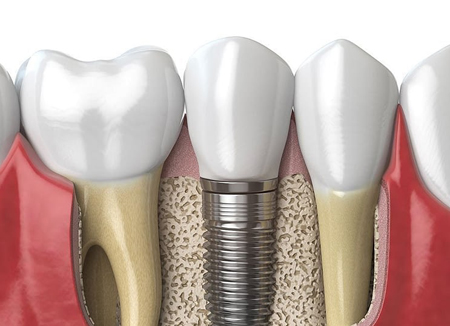
When a dental implant has failed, we recommend getting a second opinion from a skilled implant dentist. Look for a provider with post-graduate training in implantology. The dentist will need a 3D CT scan to help determine the cause of implant failure. Perhaps you need bone grafting to build up your jawbone, allowing it to support a dental implant.
If a dentist forced your temporary crown on the implant, the force may have contributed to dental implant failure. If your dentist continues cooperating, you can request a refund.
Although the cause of burning mouth syndrome is unknown, many incidents relate to dental trauma. When you find a gentle dentist who may use sedation to relax you during your visit, your burning mouth will likely calm down. Otherwise, speak with your new dentist about your concerns.
Rocky Hill, Connecticut, cosmetic dentist Dr. Thaddeus Michalski sponsors this post.
Dental Implant Delay Because a Sinus Perforation Won’t Heal
A sinus perforation after a second molar extraction is not healing. I wanted to schedule a consultation for a dental implant and probably a bone graft in June, but the perforation will not heal. My dentist asked me to be patient, but it’s been five months. How long should I wait before getting a second opinion? Thank you. Kasia
Kasia,
Thank you for contacting Radiant Smiles of Rocky Hill regarding a sinus perforation and delay in getting a dental implant.
How Long Does It Take for a Sinus Perforation to Heal?
Five months is enough time for mild to moderate sinus perforation to heal. Large perforations can take longer. Feel free to get a second opinion whenever you want. Although a sinus perforation does not necessarily mean that a dentist or oral surgeon was negligent, the dental professional who removed your tooth should take responsibility for giving you follow-up care and ensuring your recovery is as smooth as possible.
Why Would a Sinus Perforation Occur?
A sinus perforation may occur when a thin layer of bone or membrane separates tooth roots from the sinus. Has your dentist or oral surgeon attempted to close the opening? We recommend asking for a referral to an oral surgeon or seeking a second opinion on your own.
An unhealed perforation will delay your dental implant treatment because a dental implant requires the following:
- Healthy bone to support the implant
- Healthy gum tissue to heal around the implant
- Stabile environment to help a dental crown on the implants
Getting a Dental Implant After a Sinus Perforation
You can expect a highly trained implant dentist or oral surgeon to assess and repair your sinus perforation. A sinus augmentation or bone graft will ensure your dental implant has a healthy foundation that will integrate with the implant.
Request a consultation or second opinion promptly to repair the tear and promote healing.
Dr. Thaddeus Michalski, a Rocky Hill, Connecticut dentist and Diplomate of the International Congress of Oral Implantologist, sponsors this post.
What Are the Types of Bone Grafting for Dental Implants?
Successful dental implant placement requires sufficient jawbone volume because your bone is the foundation for dental implants. When a tooth is missing, your body resorbs the surrounding bone and uses the minerals elsewhere in the body. If you have experienced jawbone shrinkage, you may need bone grafting to build up the bone before you get dental implants.
What Are the Types of Dental Implant Bone Grafting?
Types of bone grafting for dental implants include your bone, tissue-bank human bone, animal bone, mineral bone, and synthetic bone manufactured from proteins in the body.
- Your bone (autograft) – Your chin, hip, jaw, or tibia can be a source of bone for grafting into your jawbone. Harvesting bone from another site requires surgery. Some implant dentists or oral surgeons harvest tibia bone in the office while you are under IV sedation. Harvesting bone from your hip requires hospitalization. Autografts are the most effective bone grafting because your body adapts quickly.
- Tissue bank human bone (allograft) – Reputable tissue banks supply human cadaver bone. Tissue bank grafting is less expensive than autograft. Although tissue banks screen donors, you will have the risk of infection from donor tissue, as with a blood transfusion.
- Animal bone (xenograft) – Sterilized animal bone—most often from a cow—minimizes the risk of infection. Your body absorbs the bone over time and replaces it with your bone.
- Mineral bone substitute (alloplast) – Next to bone harvested from your body, synthetic bone is the safest means of grafting. Your body will eventually absorb and replace the bone with your bone tissue.
- Recombinant gene technology-derived protein – Proteins naturally found in the body are used to manufacture bone synthetically. The protein is FDA approved as an alternative to an autograft.
How Long Is Dental Implant Bone Graft Healing Time?
The bone grafting healing period can take four to nine months, depending on the graft used and how your body reacts to it. After it heals, your dentist or oral surgeon will perform dental implant surgery. In some cases, such as with tooth extractions, you may receive bone grafting and implants on the same day. Your implant dentist will explain your options for bone grafting and the outcome you can expect.
Rocky Hill, Connecticut dentist Dr. Thaddeus Michalski, sponsors this post.
Should I Get a Root Canal or an Extraction?
I need a root canal or extraction and implant for my lower right first molar. The tooth behind it is missing, too. I can only afford to replace one tooth at a time, so I am replacing the one that shows the most when I smile. My dentist gave me the option of a root canal or an implant. I am a little concerned about the root canal, and if something goes wrong, I will need an implant anyway. Which option makes sense? Peter from Orange, NJ
Peter,
Thank you for your question.
Dr. Michalski would need to examine your tooth and x-ray to explain precise treatment options, but we will explain some basic principles for saving or replacing missing teeth.
Root Canal or Extraction?
Saving a natural tooth with root canal treatment makes sense. Your tooth will need a crown to protect it. The American Association of Endodontics (root canal specialists) recommends that you choose root canal treatment over an extraction and dental implant whenever the tooth is savable. Root canal procedures have a 97 percent success rate. Also, when you are missing molar teeth and do not try to save or replace them, you will have difficulty chewing food well enough to digest it properly.
Although a dental implant is a safe, predictable way to replace a tooth, no form of tooth replacement is better than a natural tooth.
Is a Root Canal Painful?
Root canal therapy is not painful when you select an experienced dentist for treatment. A gentle dentist will take these steps to ensure you are comfortable:
- Explain options for sedation before your procedure date if you have dental anxiety
- Apply a local anesthetic to prevent you from feeling the numbing injection
- Numb the root canal tooth
- Remove the infected tooth pulp, sanitize the tooth, and fill it with a dental material
- Explain how to minimize your discomfort with medication at home
Schedule a Second Opinion
We recommend scheduling a second opinion with an experienced dentist to discuss your options. Eventually, you will need an exam and x-rays to assess your oral health and get an accurate diagnosis and treatment options.
Rocky Hill, Connecticut dentist Dr. Thaddeus Michalski, sponsors this post.